During a scientific conference, a Bulgarian team introduced the international community to the measures taken to protect the Rhodope phenomenon, as part of the project "Chairski Lakes: Biodiversity Capsules in the Rhodopes."
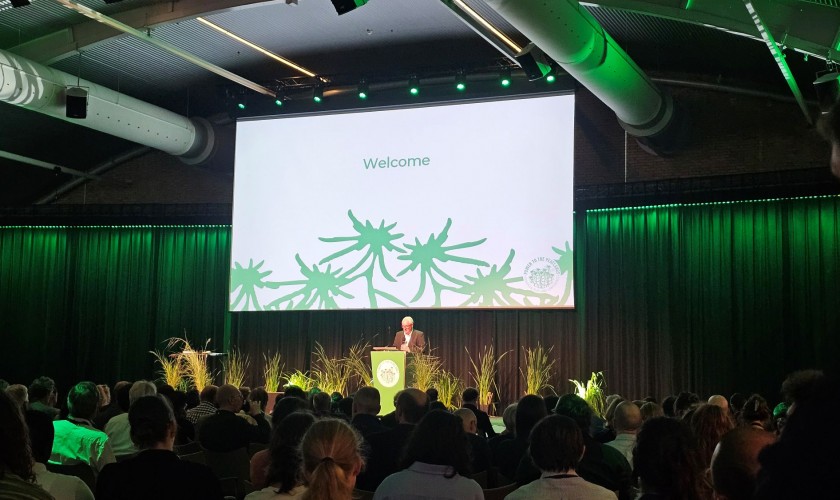
The project "Chairski Lakes – Biodiversity Capsules in the Rhodopes," run by DEVIN JSC and the Bulgarian Biodiversity Foundation (BBF) and dedicated to studying and protecting one of the most fragile and valuable ecosystems in the Rhodope Mountains — peatlands — was showcased on the European stage for the first time. Information and scientific data gathered over the past three-plus years were presented to the international professional community at the European conference Power to the Peatlands, held from 2 to 4 September in the Netherlands, which brings together scientists, conservationists, institutions, land users, and business representatives from various countries.
In its effort to preserve the unique nature of the Chairski Lakes, DEVIN found a natural ally back in 2023 in the Bulgarian Biodiversity Foundation, which, together with scientists from the Institute of Biodiversity and Ecosystem Research at the Bulgarian Academy of Sciences (IBER-BAS), studies the biodiversity, water regime, and condition of the local peatlands. It was the foundation's team of researchers who presented the Bulgarian project to the international professional community.
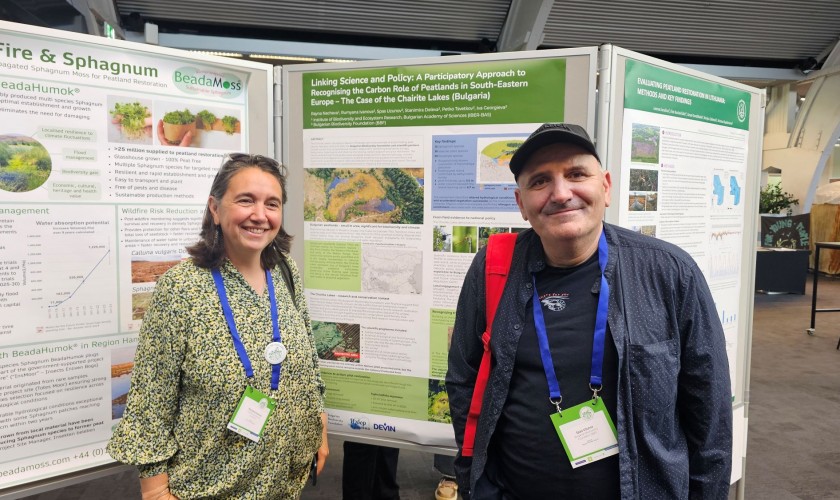
At the conference, a poster was presented titled "Linking Science and Policy: A Participatory Approach to Recognising the Carbon Role of Peatlands in South-Eastern Europe – The Case of the Chairite Lakes (Bulgaria)," which traces how partnership between business, scientists, and conservationists can turn scientific knowledge into real action for nature conservation.
Between 2023 and 2025, work on the Chairski Lakes has produced concrete results. Scientific studies have become the basis for pilot restoration activities, including limiting the overgrowth of the floating peat island with conifers and removing 600 square meters of cattail from Golyamoto Ezero (the Big Lake). Research into carbon processes in the peatland has also begun, and the data collected has provided grounds for proposing an expansion of the "Chairski Lakes" protected area to include the Big Lake and its valuable floating peat island.
The presentation in the Netherlands marks an important next step for the project — Bulgaria's experience with the Chairski Lakes is now entering the European professional conversation on peatland restoration, biodiversity conservation, and the role these ecosystems play in water retention and carbon storage.
The ambition of the Bulgarian scientists does not end with this specific site in the Rhodopes. After three years of work, the next goal is for peatlands and peat-forming wetlands to be more clearly recognized as a national priority. The first step will come at the end of September, when DEVIN and BBF, in partnership with the Ministry of Environment and Water, organize a national round table with the participation of scientists, institutions, representatives of protected areas, and conservation organizations.
The discussion will focus on improving knowledge and mapping of peatlands in Bulgaria, restoring degraded peat-forming wetlands, and the potential for these valuable ecosystems to play a more significant role in nature and climate restoration policies.
www.devin-bg.com